
Honeybees: When Conservation Chooses the Wrong Poster Child
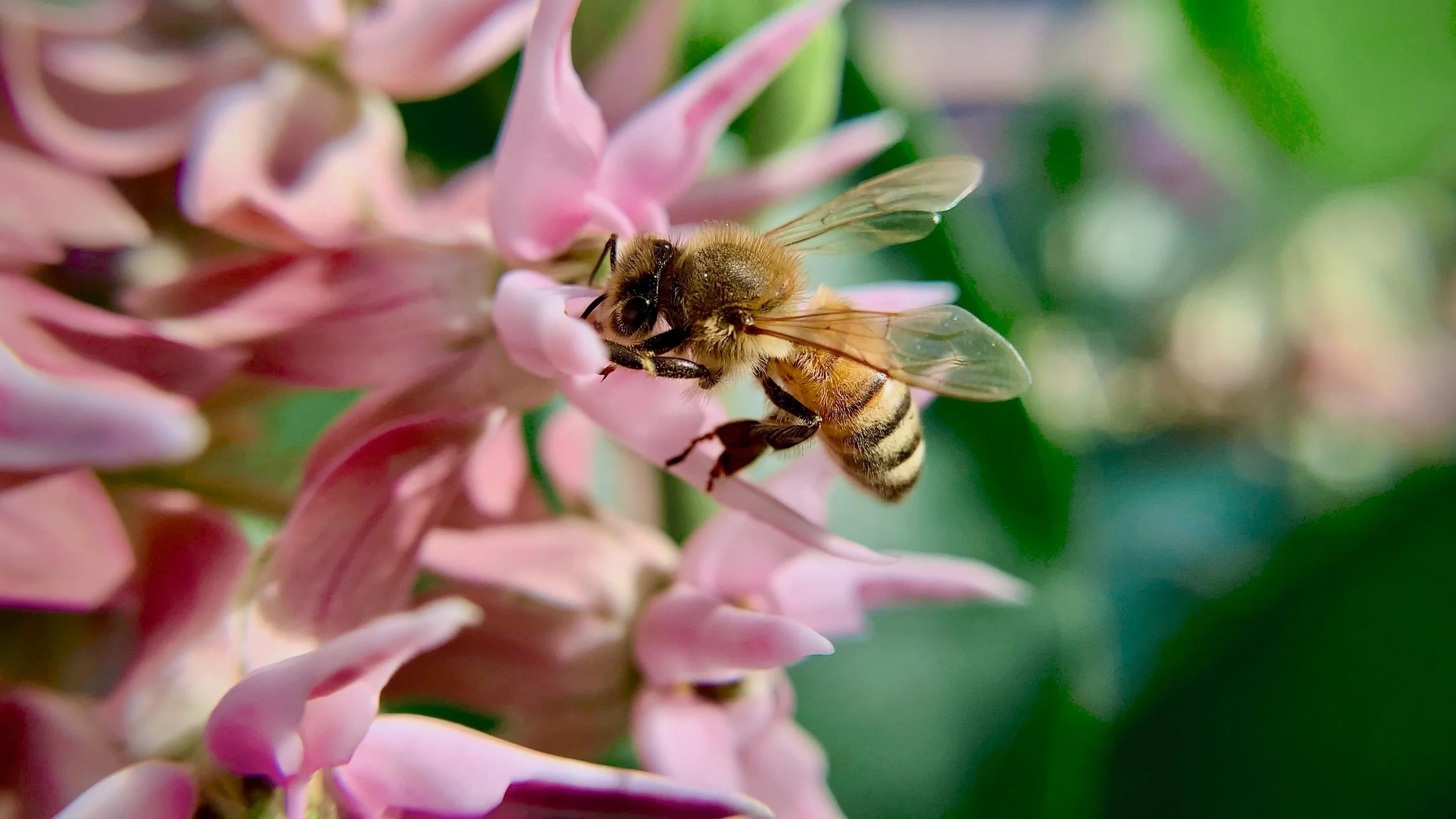
When the topic of pollinator conservation comes up, many people think foremost of honey bees, and the threats to honey bee populations that have been in the news. However, it’s important to recognize that unlike the native bumble bees, solitary bees, butterflies, moths, birds, flies, and beetles supported by this guide, honey bees are not native to this continent; they were brought to North America from Europe in the 1600s. They are now considered “naturalized” in North America—they have become so prevalent over such a long period of time that they have integrated into native natural communities. While not technically invasive, European honey bees have been linked to the decline in native bee populations. Though they can be valuable agricultural pollinators, honey bees have also been shown to compete with native bees for food resources in the wild, adding yet another stressor to native pollinator populations. While honey bees have their place in farm settings, they have not evolved to be effective pollinators for our native flora, can actually be harmful to our native ecology, and certainly distract attention from the native pollinators that should be the focus of our communal efforts and attention.
Here again, the resilience of our natural systems, including our food system, depends on their biodiversity. As honey bee populations on our farms become plagued by Colony Collapse Disorder and other afflictions, the value of diverse, healthy native bee populations becomes all the more clear. Current large-scale farming practices involve transporting huge hives of European honey bees from farm to farm, rather than managing farmlands to sustain local populations of native pollinators which can do the same job, and in some cases, do it better. As stressed-out honey bees accrue diseases, and accumulate a massive carbon footprint crossing state lines, the need to shift our focus to conserving native bees has never been more urgent.