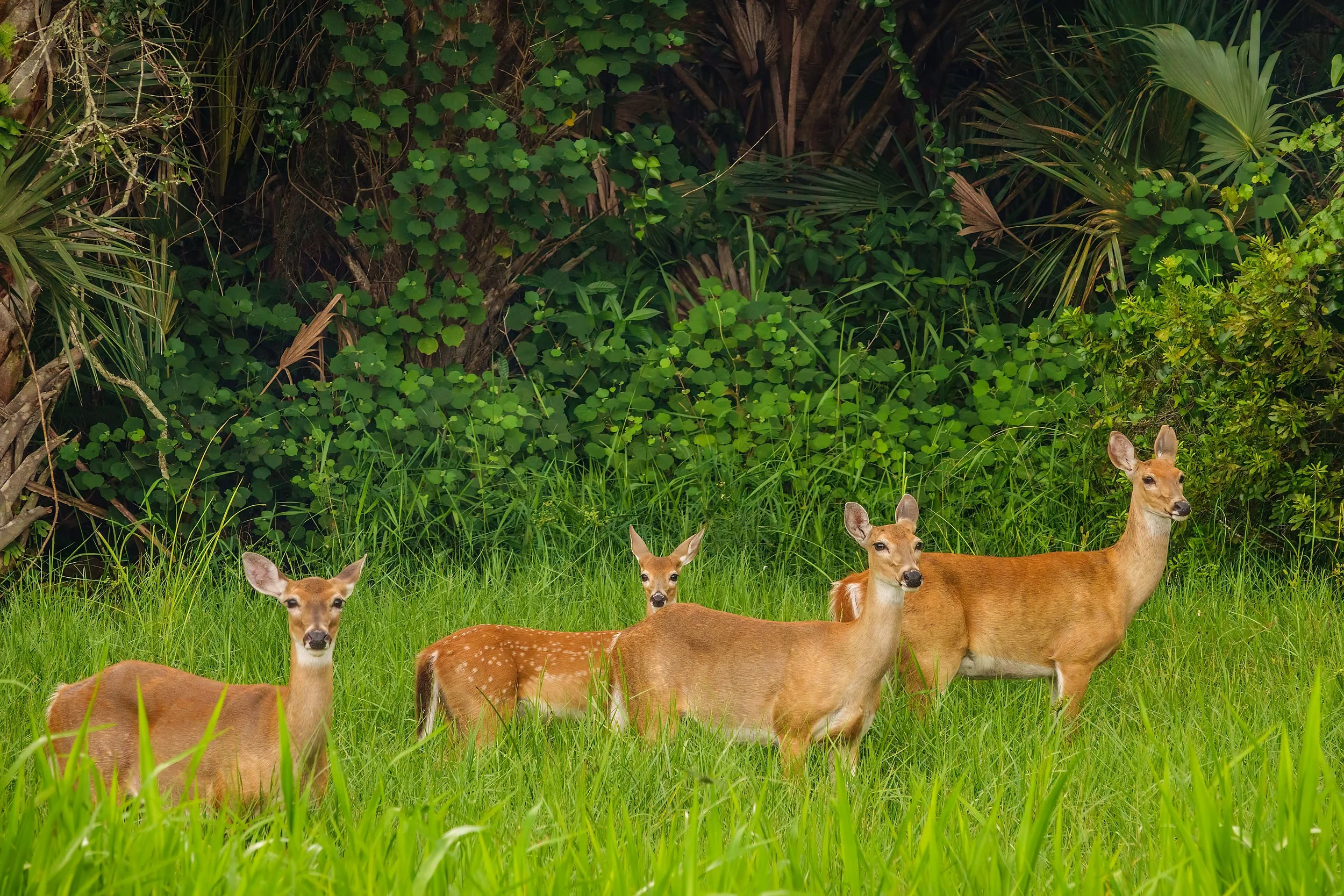
THE HUDSON VALLEY DEER CRISIS
Deer are not just a garden nuisance. The Northeastern US is in the midst of a deer overabundance crisis that threatens the health of our forests, farms, native plants, pollinators, birds, and more. In many areas, deer exceed 100 per square mile - over ten times what our native ecology can sustainably support.
Deer are a native species, adapted to eat native plants. Deer browse on native plants paves the way for invasive plant spread and prevents our forests from regenerating. Deer browse on the native flowers and host plants that pollinators need contributes to pollinator decline. Deer overabundance is even associated with the spread of invasive earthworms.
Scroll down for practical actions to take today, for gardeners, farmers, forest managers and more.
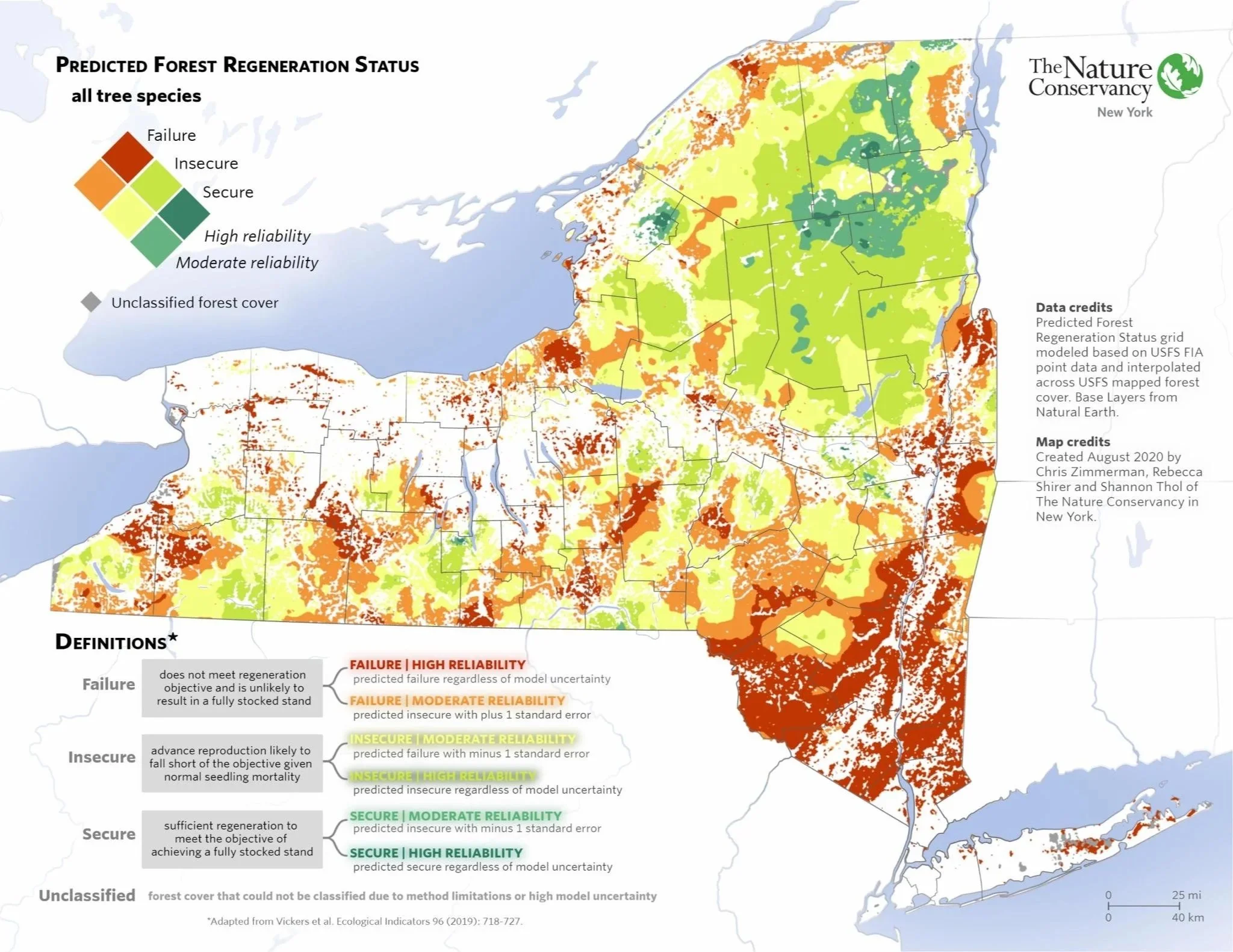
This model of forest regeneration in New York, published by The Nature Conservancy in 2020, shows that most of the Hudson Valley’s forests are in regeneration failure zones. New trees are unable to grow due to deer overbrowsing, while native wildflowers are disappearing.
To learn more about the roots of our deer crisis and potential solutions:
View presentation by Hudson Valley deer manager and land steward Eli Arnow
View summary document from Healthy Yards, including detailed history, legislative solutions, and list of relevant sources and organizations
What Can I Do at Home?
If there are woods on your property:
Consider installing an inexpensive but effective deer exclosure fence to protect existing woodland plants and allow new seedlings to grow. These unobtrusive fences can last up to 30 years and do not restrict or harm other wildlife. Use in areas from 100 square feet to 10+ acres.
View Document: Deer Exclosure Instructions and Materials List
Garden Solutions - More Effective
Fencing: Generally the best option for gardens, though sometimes costly or unsightly. Many types available including metal, plastic, wood, and multi-strand electric fence. Areas smaller than 12x12’ can be protected with a 4’ high fence. Fences for large areas should be 7-8’. Fences on individual trees or plants should be 5-6’.
Sprays: Many nontoxic and organic deer deterrent sprays are available, but deer often become habituated to the smell and start nibbling again. Some gardeners rotate products to combat this. Effectiveness varies depending on weather conditions like rain.
Garden Solutions - Less Effective
Ultrasonic Repellers: These small battery- or solar-powered devices, inserted into the soil in your garden, produce a high-pitched frequency that’s inaudible to most humans but irritating to some deer. They are usually not a consistent or permanent deer deterrent and may cause serious stress to other wildlife.
“Deer resistant” plants: Unfortunately, many of our most beautiful pollinator-friendly native plants are not deer resistant - that’s part of why they, and their pollinators, are declining. Deer taste preferences also vary widely between herds, even within a small area. We don’t recommend specific deer resistant species.
Actions for Suburban and Rural Residents
Install a deer exclosure in your woods. Get to know your property’s ecology and place exclosures in areas with remnant biodiversity and native species when possible.
Allow hunting on your land. Require that hunters remove female deer (does) in addition to bucks, as harvesting bucks does not reduce deer populations.
Learn to hunt. Any New Yorker over 11 years of age can take the Hunter Safety Course (online or in person) to become a licensed hunter.
Large forest owners, or groups of neighbors, can apply for the Deer Management Assistance Permit (DMAP) program, which provides additional doe harvest permits (tags) that can be used by hunters on your property.
Actions for Farmers
Working farms have access to a tool unavailable to most landowners: The Deer Damage Permit program (DDP), administered by New York DEC. DDP allows on-farm hunting outside the regular season using special methods. Farmers in the program can harvest deer themselves, or partner with local hunters to safely remove deer, all at no cost to the farm.
Friends and neighbors of farmers: Use this template letter to approach your local farmer about enrolling in the DDP program.